First Day at the Chelsea Public School
The Captain and Ann BarbaraFirst Day at the Chelsea Public School is the hinge on which Mary Antin's entire American story turns. It is the bright September morning when the immigrant child, after years of waiting, the long road from Polotzk, and the conscious ambitions she entertained, finally enters the public school. The day is the apex of her civic pride and personal contentment, an occasion whose importance she says was a hundred times magnified by the years she had waited, the road she had come, and the conscious ambitions she entertained. It is also the moment when the family's divided destiny is sealed: Mary is led to the schoolroom with its sunshine and singing, while her sister Frieda is led to the workshop with its foul air and care-lined faces. The event is the fulfillment of the father's best promises to his children, and Frieda's share in it is to fashion and fit the calico frocks in which the baby sister and Mary make their first appearance in a public schoolroom.
The Long-Awaited Morning
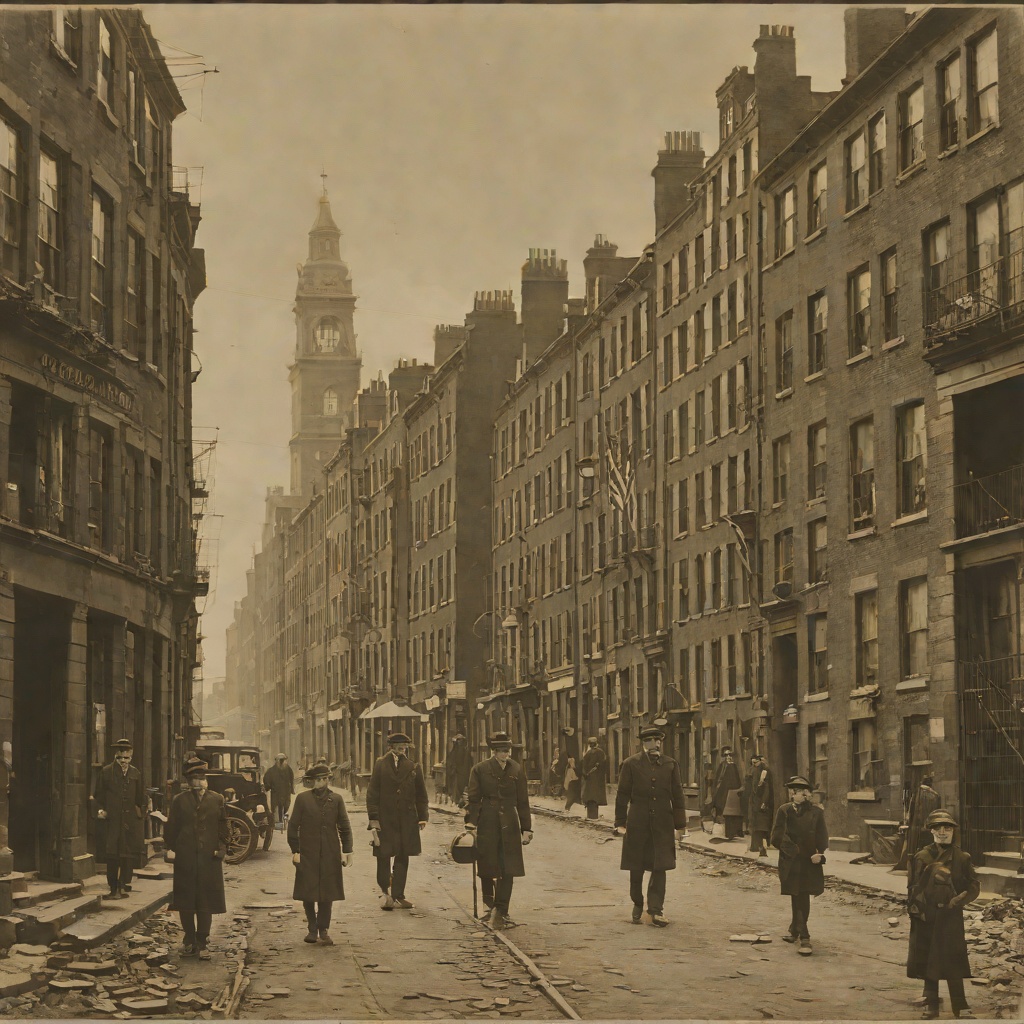
The morning itself is charged with a significance that transcends the ordinary first day at school. For most people their first day at school is a memorable occasion, but for Mary the importance of the day was magnified a hundredfold. She remembers to this day the gray pattern of the calico, so affectionately did she regard it as it hung upon the wall, calling it her consecration robe awaiting the beatific day. The two sisters stood a moment in the doorway of the tenement house on Arlington Street that wonderful September morning. It was Mary who ran away on winged feet of joy and expectation; it was Frieda whose feet were bound in the treadmill of daily toil. Mary was so blind that she did not see that the glory lay on her sister, and not on herself. The moment is rendered with painful retrospective clarity: Mary was so preoccupied with her own happiness that she did not half perceive the splendid devotion of Frieda's attitude towards her, the sweetness of her joy in Mary's good luck.
The Father's Consecration
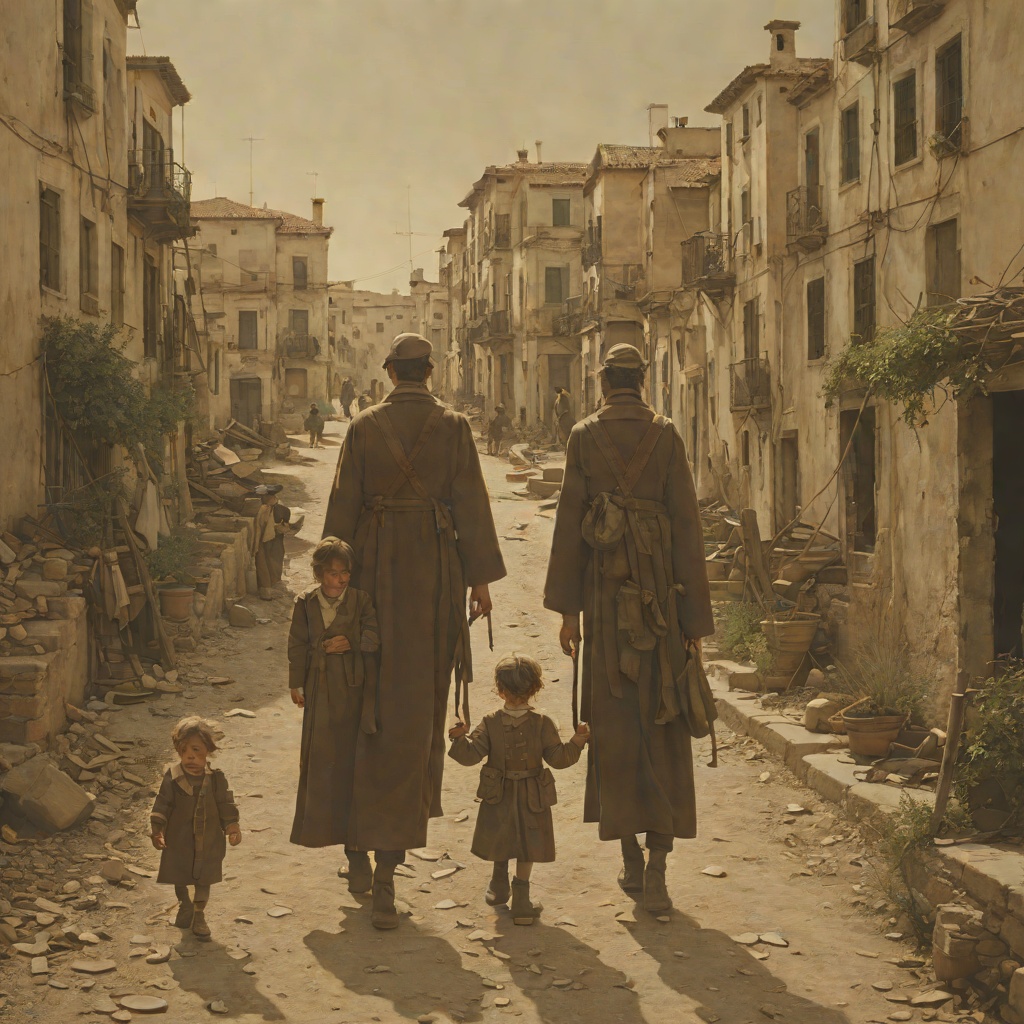
Father himself conducted the children to school, and he would not have delegated that mission to the President of the United States. He had awaited the day with impatience equal to Mary's, and the visions he saw as he hurried them over the sun-flecked pavements transcended all her dreams. Almost his first act on landing on American soil, three years before, had been his application for naturalization, and he had taken the remaining steps in the process with eager promptness, becoming a citizen of the United States at the earliest moment allowed by the law. He had left home in search of bread for his hungry family, but he went blessing the necessity that drove him to America. The boasted freedom of the New World meant to him far more than the right to reside, travel, and work wherever he pleased; it meant the freedom to speak his thoughts, to throw off the shackles of superstition, to test his own fate, unhindered by political or religious tyranny. He was only thirty-two when he landed, and most of his life he had been held in leading-strings; he was hungry for his untasted manhood. Three years passed in sordid struggle and disappointment, and he was not prepared to make a living even in America. If education, culture, the higher life were shining things to be worshipped from afar, he had still a means left whereby he could draw one step nearer to them: he could send his children to school. His children should be students, should fill his house with books and intellectual company, and thus he would walk by proxy in the Elysian Fields of liberal learning. He took long strides in his eagerness, the rest of the family running and hopping to keep up.
The Group Around the Teacher's Desk
At last the four of them stood around the teacher's desk, and the father, in his impossible English, gave the children over in her charge, with some broken word of his hopes for them that his swelling heart could no longer contain. Miss Nixon, the teacher, was struck by something uncommon in the group, something outside of Semitic features and the abashed manner of the alien. Mary's little sister was as pretty as a doll, with her clear pink-and-white face, short golden curls, and eyes like blue violets when caught looking up. Her brother might have been a girl too, with his cherubic contours of face, rich red color, glossy black hair, and fine eyebrows; whatever secret fears were in his heart, remembering his former teachers who had taught with the rod, he stood up straight and uncringing before the American teacher, his cap respectfully doffed. Next to him stood a starved-looking girl with eyes ready to pop out, and short dark curls that would not have made much of a wig for a Jewish bride. All three children carried themselves rather better than the common run of green pupils that were brought to Miss Nixon. But the figure that challenged attention to the group was the tall, straight father, with his earnest face and fine forehead, nervous hands eloquent in gesture, and a voice full of feeling. This foreigner, who brought his children to school as if it were an act of consecration, who regarded the teacher of the primer class with reverence, who spoke of visions like a man inspired in a common schoolroom, was not like other aliens who brought their children in dull obedience to the law, nor like the native fathers who brought their unmanageable boys, glad to be relieved of their care. Mary thinks Miss Nixon guessed what her father's best English could not convey, and divined that by the simple act of delivering their school certificates to her he took possession of America.
The Divergence of Sisters' Fates
The first day at school is inseparable from the story of Frieda's sacrifice. The two of them had been close friends, children together until that morning, but now, at the fiat of her destiny, Frieda became a woman with all a woman's cares, whilst Mary, so little younger, was bidden to dance at the May festival of untroubled childhood. Frieda's heart did throb that day, but not with Mary's emotions; in her heart longing fought with abnegation. She bent over the sewing-machine humming an Old-World melody, and in every straight, smooth seam she perhaps tucked away some lingering impulse of childhood, but she matched the scrolls and flowers with the utmost care. If a sudden shock of rebellion made her straighten up for an instant, the next instant she was bending to adjust a ruffle to the best advantage. When the momentous day arrived, it was Frieda herself who patted and smoothed Mary's stiff new calico, who made her turn round and round to see that she was perfect, who stooped to pull out a disfiguring basting-thread. Longing she felt, but no envy; she did not grudge Mary what she was denied. The family tradition held that Mary was the quicker, the brighter of the two, and that hers could be no common lot; Frieda was relied upon for help, and her sister for glory. When Mary failed as a milliner's apprentice while Frieda made excellent progress at the dressmaker's, their fates were sealed, and it was understood even before they reached Boston that Frieda would go to work and Mary to school. The father had sent them hand in hand to school before he had ever thought of America, and if he had been able to support his family unaided, it would have been the culmination of his best hopes to see all his children at school with equal advantages at home. But when he had done his best and was still unable to provide even bread and shelter for them all, he was compelled to make the children self-supporting as fast as it was practicable; Frieda was the oldest, the strongest, the best prepared, and the only one who was of legal age to be put to work. Mary accepted the arrangements made for her sister and herself without much reflection, taking everything that was planned for her advantage as a matter of course, and she took everything from Frieda's hand as if it were her due.
The Old-World Context of the New Beginning
The significance of the first day at school is thrown into relief by the Old-World conditions the children left behind. In Polotzk, a girl's real schoolroom was her mother's kitchen, where she learned to bake and cook and manage, to knit, sew, and embroider, and while her hands were busy, her mother instructed her in the laws regulating a pious Jewish household and in the conduct proper for a Jewish wife, for every girl hoped to be a wife, and a girl was born for no other purpose. Marriage was a sacrament with the Jews in the Pale, and to rear a family of children was to serve God; parenthood was the great career, and woman's only work was motherhood. To be left an old maid was the greatest misfortune that could threaten a girl. The fear that shadowed Jewish childhood in the Pale also haunted the memory: the terror of baptism, which was worse than death by torture, so that Mary would rather have drowned in the Dvina than let a drop of baptismal water touch her forehead. The first day at the Chelsea public school, with its sunshine and singing and the teacher's cheery smile, stands as the antithesis of that world of fear and limited destiny. The event is thus not merely a personal milestone but the demonstration of what American free public education offered to the immigrant child, the very institution that would later carry Mary from the slums to the college gate, so that from the Latin School on she lived very much as her American schoolmates lived, having overcome her foreign idiosyncrasies. The day on Arlington Street, when the father delivered his children to Miss Nixon and thereby took possession of America, is the moment the Old World's grip is broken and the New World's promise is accepted.